
How two Dutch brothers who wanted to make a lightbulb factory started a multinational company
Looking around your living room, kitchen or bathroom, it may surprise you how much has been thoroughly influenced by the innovation of a single company - Philips.
An immense variety of products has been produced by this firm: coffee makers, electric razors, X-Ray machines, cassette tapes, colour televisions...
But it all started in Eindhoven, a small Dutch town, in 1891, with a lightbulb moment.


Who were the Philips brothers?
Gerard Philips, pictured above, was the youngest of three brothers.
In the picture, he's experimenting with carbon filaments, which would become the main source of light in the lamps he would later produce.
On the back of the picture an anecdote is written that says that Anton Philips, Gerard's brother, was never really interested in Gerard's experiments. On more than one occasion, he had tried to knock over Gerard's experimental setups by throwing rotten apples through the window!
His interest in Gerard's exploits increased later when he became the main salesman of the Philips' company lamps.
What is the history of Philips?
Philips' lamps became very successful very quickly, which allowed the company to grow and expand at a fast rate. Between its founding and World War II, Philips started creating new types of lamps, built new factories to produce new materials and products, and expanded into new markets.
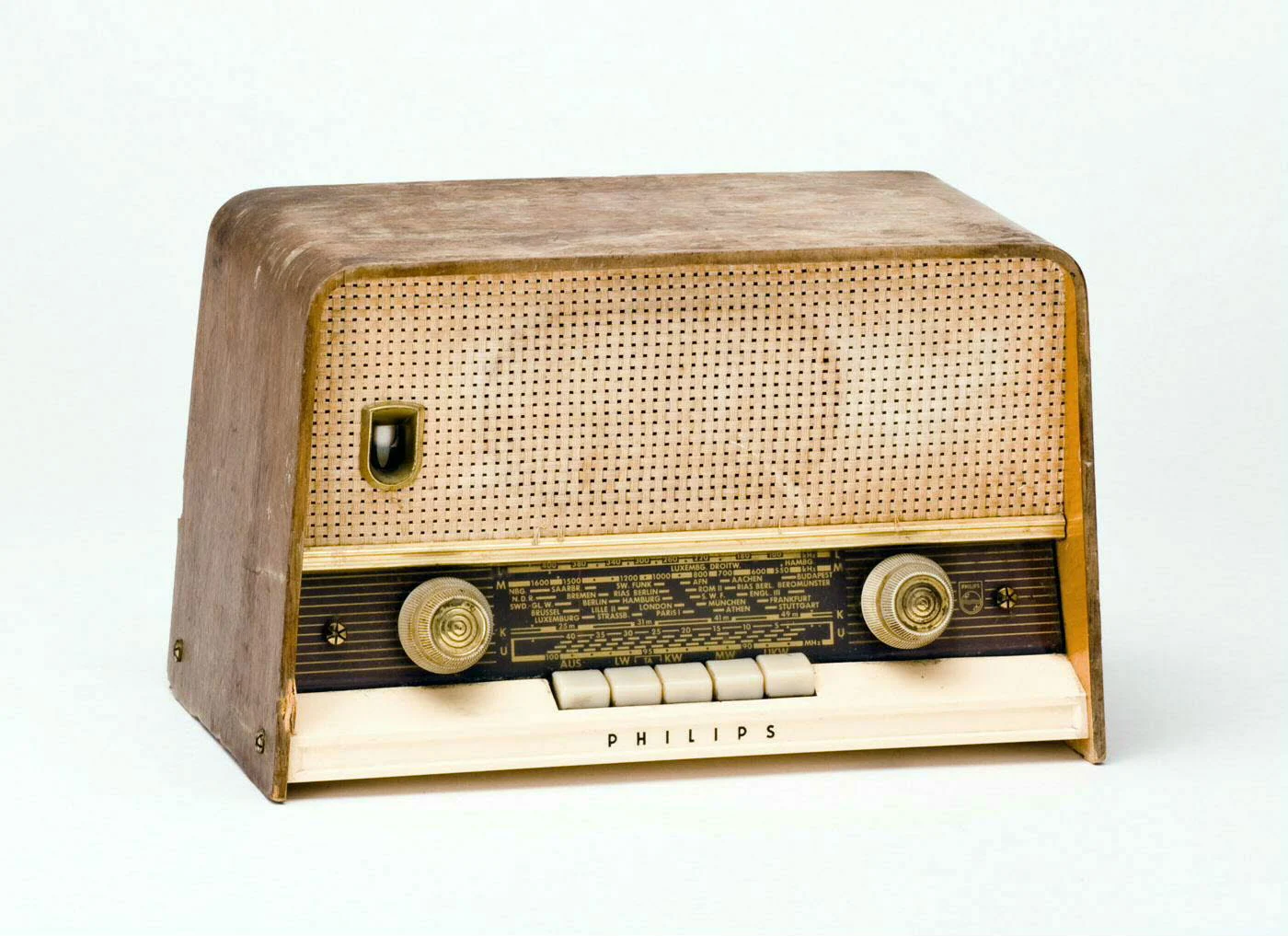
Philips profited during World War I by gaining market share in countries, such as the UK, France and Russia, which boycotted the import of technological products from Germany. In 1923, Svenska AB Philips was founded, a Swedish factory branch manufacturing radios.


This rapid expansion led to a huge growth in the economy of places where Philips put their factories and warehouses and created jobs for swathes of employees - as well as a number of different products.


In 1939, Philips started selling the first electric shaver with rotary blades, which would later become the Philishave and revolutionise the shaving and grooming market.

During World War II, many members of the Philips family moved to the United States from where they were able to keep the company running. A significant amount of machinery in Philips factories in the Netherlands was seized by the Germans and transported to Germany. After the end of the war, these machines were sent back to Philips.
The post-war era became a period of explosive expansion for Philips, in which they started producing radios and television sets, among other things. The company provided the audio systems at the 1948 Olympic Games in London.
This rapid growth led to more factories abroad, and the start of encouraging migrant workers to come to the Netherlands to work for Philips. A large amount of workers, predominantly from Spain, moved to the Netherlands to come work for the company.

In general, Philips had a good reputation. They provided schooling and housing for workers, built libraries and provided grocery stores for Philips employees. These grocery stores, Etos, still existing today in the Netherlands.


The history of Philips started small, grew quickly, and continues until this day.
Other things Philips invented or is famous for? Senseo coffee machines, the first casette tapes, X-ray machines, the VCR, the TV test pattern, and even video calling! Watch an explanation on one of the first videophones below.