
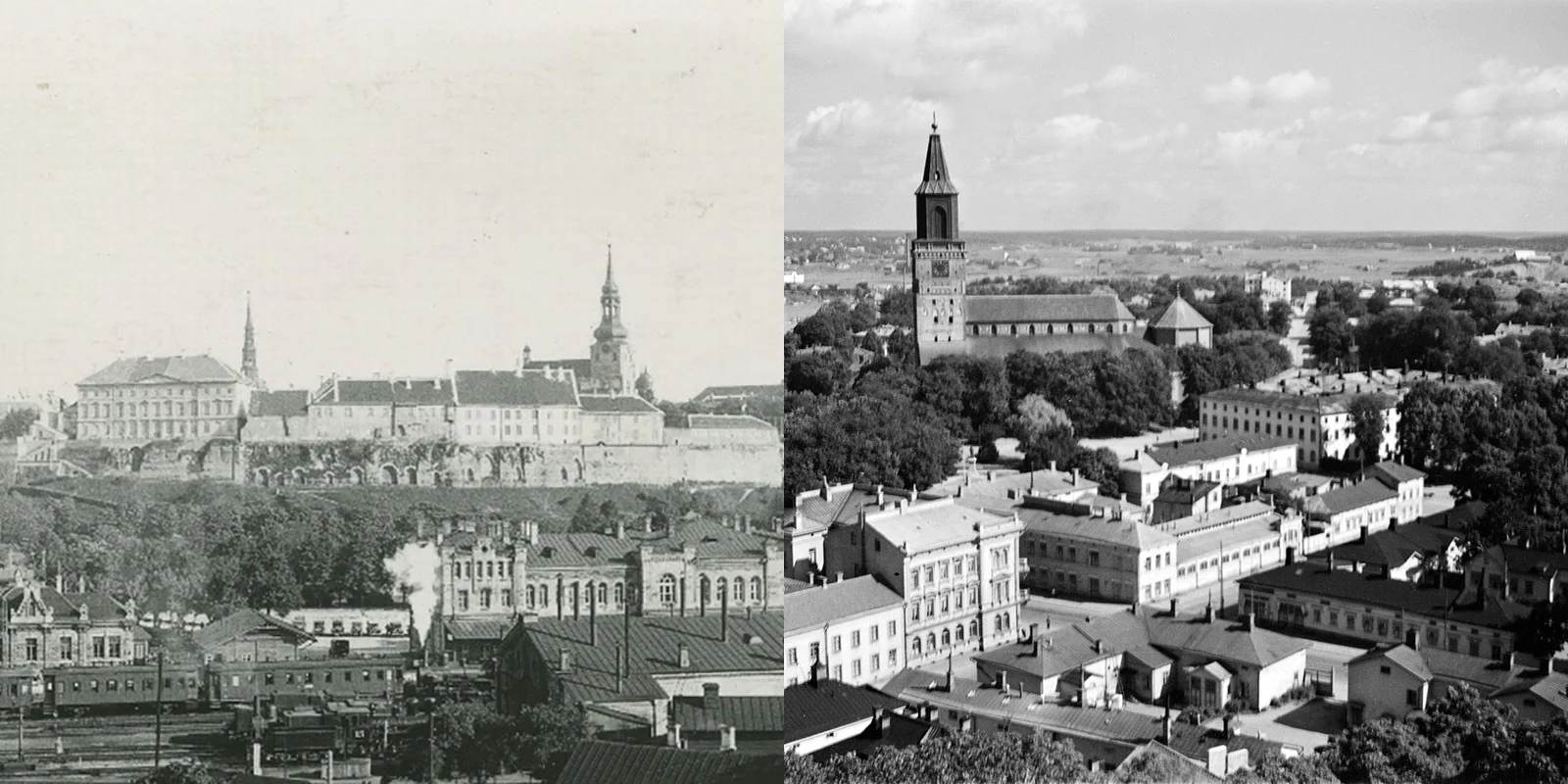
What is the history of Turku Castle and Toompea Castle?
Since 1985, the European Union has dedicated a calendar year to the European Capital of Culture, a European city or cities to promote Europe’s immense cultural assets.
Previous European Capitals of Culture include Paris (1989), Lisbon (1994), Stockholm (1998), Genoa (2004) and Istanbul (2010).
In 2011, the European Capitals of Culture are Turku and Tallinn, two important medieval trade ports. Let's take a look at their histories through their medieval castles.


Important trade cities always attracted all sorts of threats making defensive structures necessary. Tallinn and Turku were no exception: Toompea Castle in Tallinn and Turku Castle were built to withstand possible outside (and inside) aggressions.
Toompea Castle
Toompea castle was built slightly earlier than Turku Castle, having been in use since at least the 9th century.
It started out as a wooden fortress but was gradually built in a more solid way. The majority of the present-day castle was erected in late 11th and 12th centuries.

The castle consists of three parts, built on Toompea hill (from the German 'Domberg', literally meaning 'dome hill') in the centre of Tallinn. The hill takes its name from the Dome Church which is also located there.

During its colourful history, the castle has been occupied not only by Estonians (or the people of the ancient North-Estonian county Revala) but also by Danes, Swedes and Russians.
Today, Toompea Castle serves as the home of the Riigikogu, the Estonian parliament.
Turku Castle
The first bricks of the Turku castle were laid in late 13th century, when Finland was part of Sweden. It was built primarily as the city's main defensive structure to secure naval traffic from present-day Sweden (especially Stockholm) and to oversee the Aura river.
Its importance as a defence of the city was luckily only tested once - in 1318, Russians from Novgorod destroyed Turku.

The castle saw many uses. It was a stronghold for the rivals of the king of Sweden to acting as an administrative centre for western Finland. In 1987, renovations of the castle were completed and it now serves as the Turku provincial museum.
