
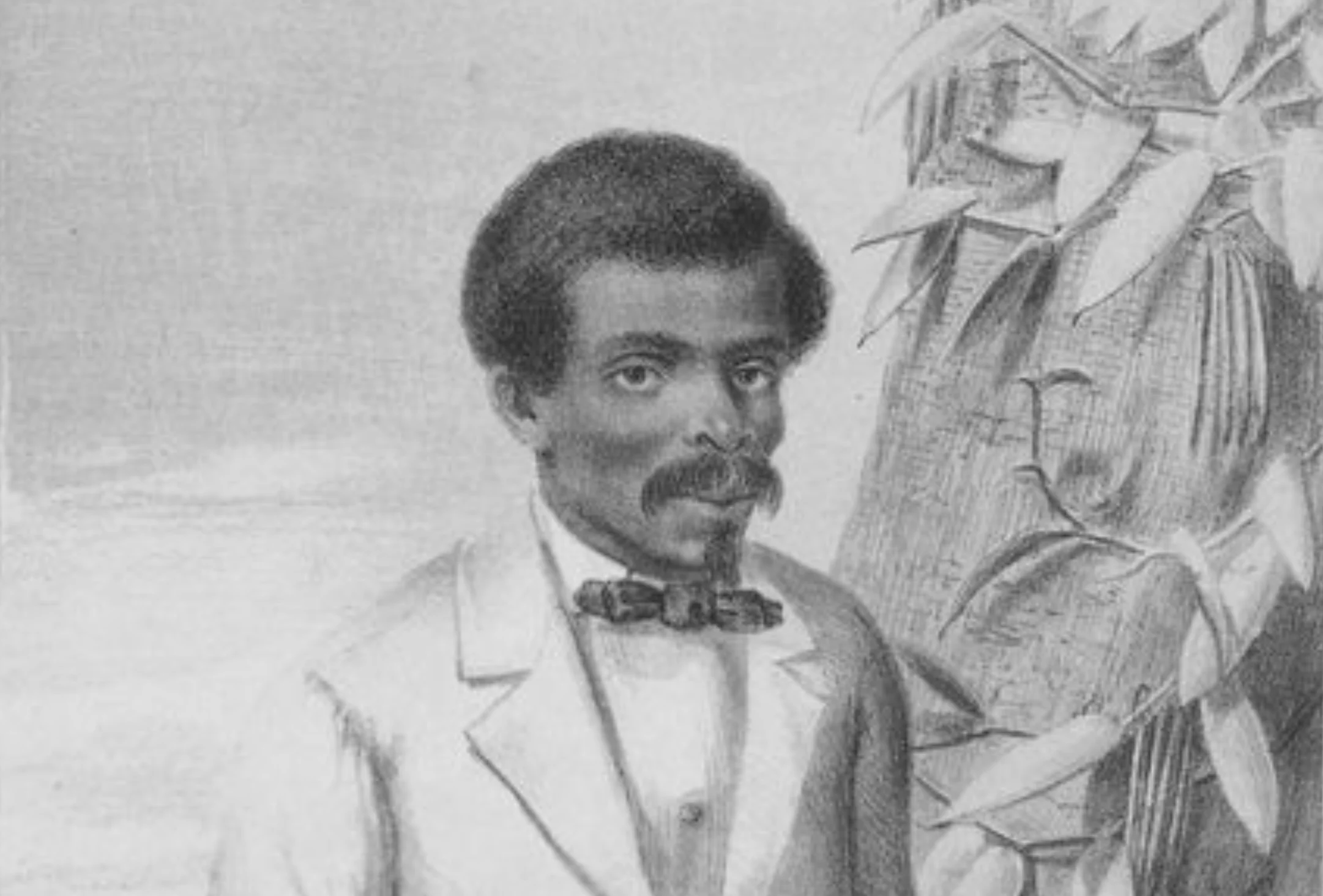
Enslaved as a child, Edmond Albius died without fortune or glory despite his discovery having put vanilla on every table in the Western world.
Edmond was born on the island of Réunion (then known as Bourbon Island) in Sainte-Suzanne on 9 August 1829. Orphaned at an early age and enslaved, he was introduced to horticulture and botany by his master, Ferréol Bellier Beaumont

What was Edmond’s vanilla discovery?

In 1841, inspired by a technique used on pumpkins, Edmond discovered how to pollinate vanilla by hand - without using insects. The process finally made it possible to envisage mass cultivation of the fragile vanilla plant, which belongs to the orchid family.

Before Edmond’s discovery, Réunion had only a few fertilised vanilla plants. Afterwards, production increased to around one tonne per year between 1850 and 1860, then to nearly 15 tonnes per year in the following decade, and to 60 tonnes per year in the early 1880s. For a time, the island was even the world's leading producer. Vanilla was found on every table in the Western world and became a sought-after ingredient in dishes loved by the powerful. Fortunes were made.
Did Edmond become rich and famous?
Sadly not. The island of Réunion was transformed. But Edmond Albius never profited from his discovery. As an enslaved child, he was even deprived of being credited for his discovery by ambitious individuals who claimed that privilege for themselves. Freed in 1848 following the abolition of slavery, Edmond took the name Albius in reference to the Latin word ‘alba’, meaning white, which references the colour of the vanilla flower.

Poor and unable to receive an education like the vast majority of newly freed people, he held several menial jobs, and even spent some time in prison. He died without fortune or glory on 9 August 1880.
How has Edmond’s contribution been recognised?
Doubt about who was responsible for the revolutionary way of cultivating vanilla persisted for decades. However, the writings of his former master, Ferréol Bellier Beaumont, confirm that there is in fact no doubt: it was indeed Edmond Albius who, through his curiosity and observation of nature, invented the technique of manual pollination of vanilla, a skill still used throughout the world today. Although it is thanks to Edmond that the coat of arms of Réunion features a vanilla vine, it was not until 1980 that his hometown of Sainte-Suzanne dedicated a plaque to him.

In 2004 a statue was unveiled to honour the local boy who made Réunion the island of vanilla. And in the town of Le Port, pupils the same age that Edmond Albius was when he made his discovery now attend a secondary school named after him. Next time you eat a vanilla ice cream, pastry or cake, think of Edmond Albius, the 12-year-old who changed the vanilla trade.
Thank you to Fondation pour la Mémoire de L’esclavage (FME) for sharing this story with Europeana.