
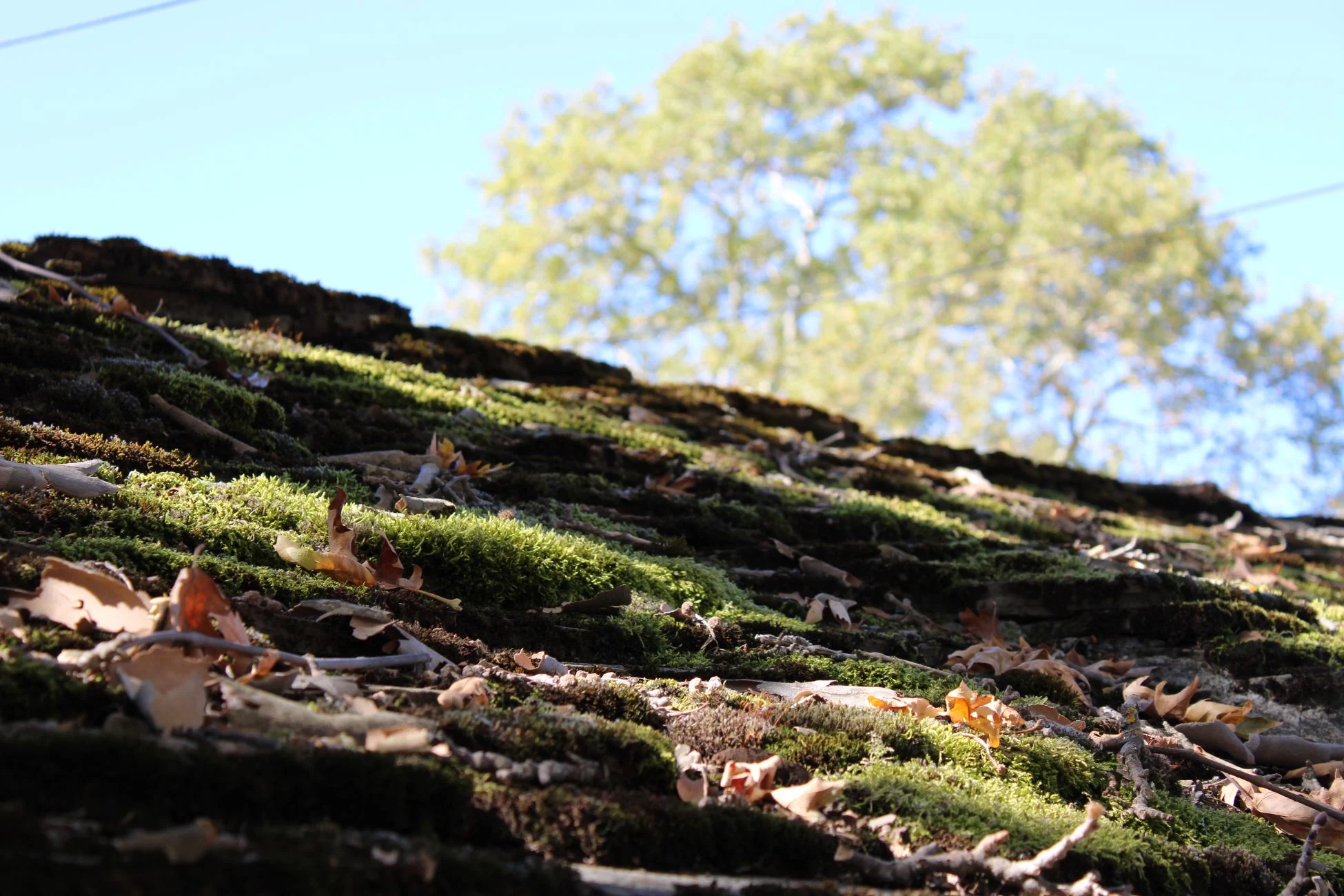
Mosses are a species that is often underestimated in the plant world and have long been neglected by science. Yet they have existed for millions of years and play an important role in human history - art, culture, housing, construction and health.
In the deepest gorge, in the bosom of the forest,
The tender green moss sprouts,
A carpet, velvety soft.
To the eye it appears small,
But its structure holds a wonder
Of treetops, leaves, and branches.
Helmina von Chézy (1785-1856), German journalist, poet, and librettist. Free translation from German of the opening lines of her poem 'Jesus and the Moss' also used as lyrics for the composition 'Moosröslein' by Carl Loewe

How old is moss?
Mosses were the first plants to make the transition from water to land and are the most primitive plants of all. But as mosses do not fossilise well, very little is known about them or their predecessors from earlier geological periods. The current scientific consensus is that moss evolved from green algae around 400–450 million years ago. The oldest moss fossils have been found in amber.

How many species of moss are there?
Around 16,000 species of moss are known worldwide. The greatest diversity of species is found in tropical regions, while around 1,700 species are found in Europe. In botanical gardens, mosses are often displayed in separate moss gardens.
There are three groups of moss species: liverworts, leafy mosses and hornworts. Of these, hornworts are the least numerous, with only 200–250 species. Around a quarter of known moss species are now classified as endangered. The decline in moss populations is caused by habitat destruction, air pollution, overfertilisation, the restoration of old buildings and walls, excessive cleanliness and order, commercial moss collection and peat extraction from moors.

How does moss reproduce and survive?
Mosses have no roots or flowers and do not contain lignin, the substance that makes up wood. Nevertheless, they are classified as plants because they perform photosynthesis. Their ability to reproduce both sexually (by forming spores) and asexually (by cloning broken-off plant parts) is considered by many experts to be crucial to their evolutionary success.


Mosses are true survivalists: some species can be found almost everywhere in the world and in a wide variety of habitats. Whether on tropical trees and in coniferous forests, in raised bogs or even on rocky or stony ground, mosses can survive for a very long time where nothing else can take root.

The key to this survivability is that mosses do not depend on a water supply from the soil, but absorb water across the entire surface of their leaves by means of osmosis (the diffusion of substances through a semi-permeable membrane). This allows them to thrive even on nutrient-poor, barren, or even stony soils, as long as the humidity in the air is high enough. When exposed to sunlight and with the necessary water supply, carbon dioxide is converted into glucose and oxygen through photosynthesis. The mineral salts they need for growth enter the plant via rhizoids, root-like structures that connect them to the soil.

Due to their fluctuating moisture levels, it is possible that their metabolism will halt during a dry phase and the plant will enter a dormant state. Once there is sufficient moisture again, the metabolism restarts.
Why are mosses important for the environment?
Mosses build habitats for many living creatures. Up to 60,000 tiny animals can be found in one square metre of moss. These low-growing plants are gaining increasing recognition in ecology, with some species serving as reliable indicators of soil moisture and acidity levels.
In addition, they can be used as bioindicators to monitor pollution levels. This is thanks to their ability to absorb water and nutrients directly through their surface. Pollutants dissolved in the water are absorbed directly, enabling environmental toxins and heavy metals to be detected in the plants.
Mosses are also increasingly being used to monitor air quality. They can even improve air quality by binding and metabolising fine dust.
Mosses also act as natural water reservoirs. Depending on the species, they can absorb 8 to 20 times their dry weight in water. This helps to prevent flooding by storing and continuously releasing water into the environment.
Peat moss is a special type of moss which makes up a large part of the mass of a moor. There are approximately 250 known species of the peat moss genus Sphagnum worldwide.


On a moor, dead parts of moss decay and carbon dioxide (CO₂) is permanently bound in the peat, which mitigates the greenhouse effect. Around 30% of the CO₂ bound in the soil can be attributed to the peat moss population! For this reason, protecting remaining moors and renaturalising those that were once drained is an extremely important concern.

Does moss have healing powers?
Mosses shine not only in their ability to reduce fine dust and their positive effect on the climate, but also because of their many other benefits for humans and the environment. Their ingredients have a germicidal effect and protect the plants from fungi and bacteria. These anti-inflammatory properties also make mosses interesting for a wide range of medical applications. For example, the Māori people of New Zealand used moss to treat sexually transmitted diseases. Some types of moss are also said to have fever-reducing and diuretic properties. Until the First World War, wound dressings made from peat moss were used for their absorbent and antiseptic properties.
The healing properties of moss have been passed down through ancient legends. This audio recording describes how peat moss can strengthen the immune system before winter arrives.
The cosmetics and health industries also make use of moss for anti-aging creams, coughs and hoarseness (using the roots of peat moss), peat baths and peat packs, and rheumatic diseases. You can also find moss in TCM (Traditional Chinese Medicine).
Mosses can also have domestic applications. Native Americans used the absorbent and disinfecting properties of mosses as diapers (nappies) for infants, while in Europe moss was often used as filling material for mattresses or wall crevices. The following herbarium specimen shows the moss Hypnum cirrhosum, whereby Hypnum derives from the Greek word hypnos, which translates as ‘sleep’ and refers to the use of moss in mattresses.

This painting, depicting an Alpine kitchen, was created by Ernst Ludwig Kirchner. He wrote that the cracks in the walls were filled with moss.

Can you build with moss?
From ancient earth houses to Nordic turf and seaweed houses in the 17th and 18th centuries, plant-based building materials have been used primarily in regions with limited wood resources to provide insulation and protection.

Research into ecological building technologies using greening systems is still ongoing, but positive effects on energy efficiency and air quality have already been observed. As a result, greening building surfaces has become increasingly important in recent years.

Buildings can be covered with taller plants, such as ivy, or shorter plants, such as moss. Mosses are more resistant to changing ambient temperatures, better withstand extreme weather events including droughts (they survive dehydration) and can bind pollutants from the air. Due to their increased water absorption, they also generate evaporative cooling, which ensures lower temperatures on the façade in summer. In winter, the plant carpet provides additional insulation, depending on its density. The use of mosses in the construction sector has led to an increasing number of suppliers of so-called ‘moss art’ for interior and exterior wall design. The positive effect of green roofs on the ambient temperature of photovoltaic (PV) systems has also been investigated, as lowering the temperature can in turn increase the efficiency of the PV elements.
However, there is a big disadvantage of greening buildings, whether roofs or façades - increased maintenance. The plants must be regularly cared for in order to fulfil their purpose and prevent damage to building surfaces. Although mosses do not require maintenance due to their limited growth, a large quantity of water is needed for them to have an ecological impact.
Are mosses under threat?
Due to human activities, moss habitats have declined significantly, resulting in an increasing number of moss species being added to the Red List of Threatened Species. As mosses are difficult to cultivate and transplant, they are primarily protected by preserving their habitat and soil.
Ultimately, mosses support our coexistence because they are versatile and play an important role in climate protection, such as storing CO₂ and binding fine dust. And it will be exciting to see what other beneficial properties of moss may be discovered in the future.

Bibliography
- Merle Geissberger: Moose in Graz und ihre Rolle als Klima- und Luftverbesserer, Graz 2019
- Eberhard Parlow/ Thomas Kleiber/ Roland Vogt: Verbesserung des Stadtklimas durch Dachbegrünung. In: Regio Basiliensis, 52/1, 2011, S. 17-28
- Daniel Ponweiser: Einsatz von Nutzpflanzen bei Fassaden- und Dachbegrünung, Wien 2021
- Spectrum.de: Moose. In: Lexikon der Biologie. Online under: https://www.spektrum.de/lexikon/biologie/moose/43933