
12
rezultata unutar
Tema
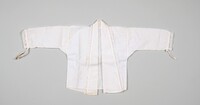 Kebaya
Kebaya
Traditional Malay womenswear in the form of a light jacket or blouse, to be worn with a sarong

Made by hand. The lace is bobbin lace. Worn by the donor herself (around 1920).
Lilac kebaya with embroidered floral motifs at the edges. The kebaya came into fashion in 1920 among the Chinese peranakans. Before that, kebaya's were worn by (Indo) European women who wanted to adapt to the tropical climate. Until 1920, the Chinese …
White kebaya of very finely woven cotton: batiste. At the bottom edge of the sleeves and of the front and back part is a lace edge. Kebaya's were part of the home wear of (indo) European ladies in the former Dutch East Indies, until about the 20s of t…
Two Photos from a Rice Process, which is the place of residence for the women of the village, where cohabitation and work are united. The women usually wear dark sarong and kebaya. (Catalogue card)
Mainly made with a sewing machine. Worn by the donor herself (about 1920).
Made by hand. The lace is machine made. Worn by the donor herself.
Such kebaya's belonged to the home wear of European and Indo-European ladies in the former Dutch East Indies until about 1920. The kebaya was closed at the front with a decorative button or pin. Underneath a sarong was worn.
White kebaya with an embroidered border. The opening of the border was obtained by cutting holes in the fabric with small scissors after embroidery. Kebaya's with this technique are called 'kebaya kerancang'. Until 1920 the Chinese peranakans …