
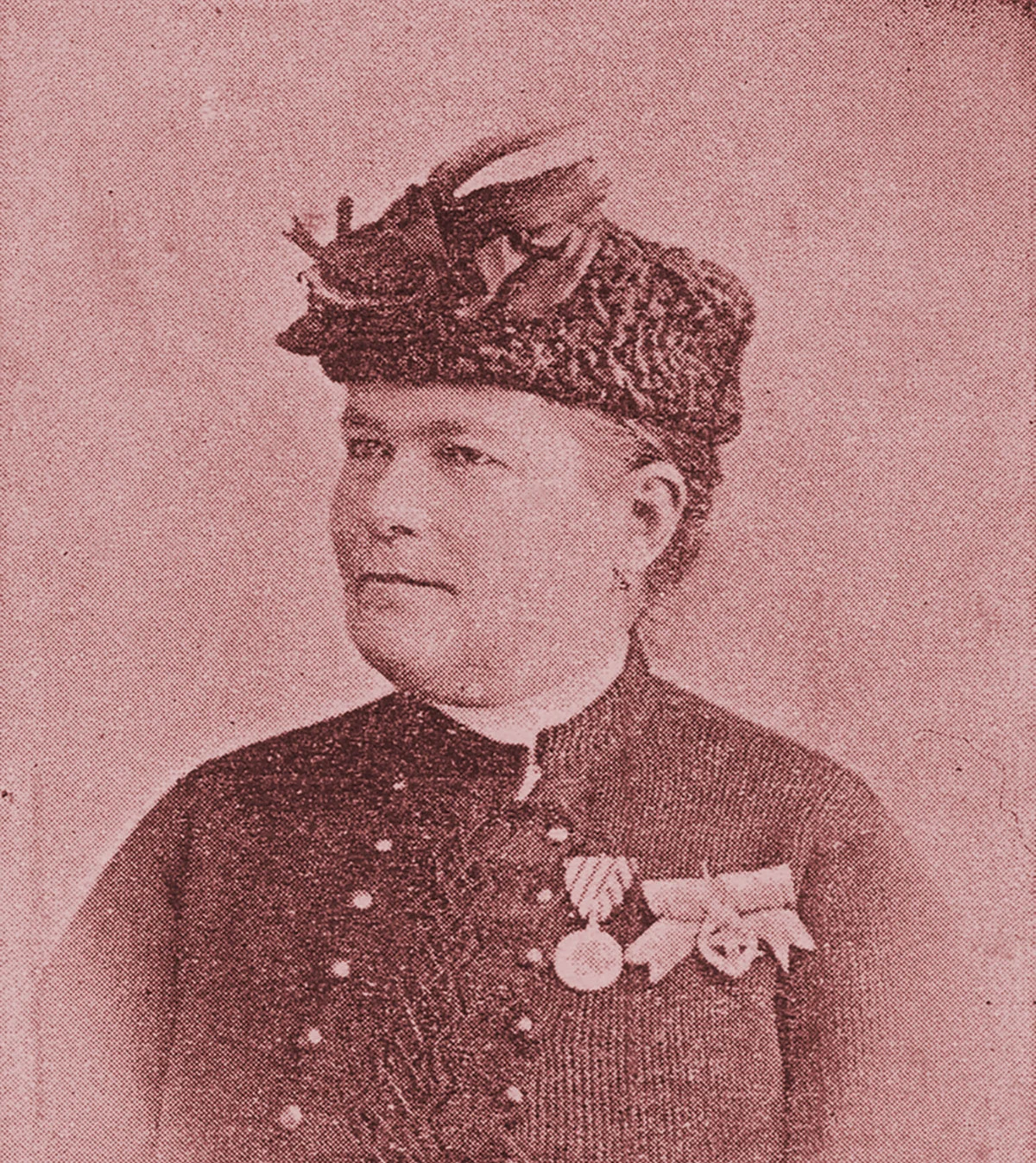
Hristina Hranova was the first midwife in Bulgaria, as well as Bulgaria’s first female lifeguard. She delivered thousands of babies, and saved the lives of dozens of drowning people.
Read on to learn more about the woman who has been nicknamed the 'mother of heroes'.

Hristina Hranova's early life
Hristina was born in Klitsura, a small village in western Bulgaria. She was born in the early 1850s, growing up as the youngest child in a large family of 18 children.
War and tragedy shaped her early years. The village where she was born saw regular riots and persecution - her family eventually moved to the outskirts of Sofia in the 1860s. Six of her brothers died in the Russo-Turkish War in the late 1870s, and four more were killed during the Serbo-Bulgarian War in 1885.

Hristina was active in the Bulgarian liberation movement. Even as a young girl, she acted as a courier. She fought in several uprisings and rebellions, and was enlisted in the Bulgarian Volunteer Corps. Sometimes disguised as a man, she was a courier, a soldier and a nurse fighting for the cause of Bulgarian independence.
After her medical training, she returned to battle, fighting in the 1885 Serbo-Bulgarian War and later in the Second Balkan War in 1913, aged 60.
Midwife and medicine
She first began to help the wounded and sick during the Russo-Turkish War in the late 1870s, which led to her work in medicine.
Thanks to a scholarship for gifted students, she began to study obstetrics at the Midwifery Institute of the Saint Vladimir Imperial University of Kiev (now the Taras Shevchenko National University of Kyiv).

She graduated in 1881 and returned to Bulgaria, starting to work as a midwife in Sofia, Lom and Silistra. Thus, Hristina became the first certified practicing midwife in Bulgaria. (Rayna Popgeorgieva Futekova was the first Bulgarian woman to hold a diploma in obstetrics, she did not initially work in her specialty).
Thanks to Hranova's work, the first maternity ward in Bulgaria was opened in Sofia in 1882.
This was the beginning of Hristina Hranova's 30 year career across different towns and cities in Bulgaria.
In the 1890s, she began working in the Black Sea coast city of Varna. She was appointed as the city's municipal midwife in 1900. She later wrote that she had delivered at least 3,462 children throughout her career.


Lifeguard in Varna
In Varna, Hristina Hranova also found her second career. Varna was developing at the time as a coastal resort, with sunshine, sea water and coastal air being recommended to treat diseases and improve health. Many people began to take up swimming.

Such a new sport caused problems and accidents, but Hristina - an excellent swimmer - volunteered to use her skills to save drowning people. As a result, she became an unofficial lifeguard, the first in Bulgaria and perhaps the world. In just two years, between 1895 and 1897, she rescued 54 people from the sea.
Recognition and legacy
In 1907, Hristina Hranova received the Bulgarian Order of Civil Merit in recognition of her work as a midwife, as well as a lifeguard.

In 1910, she was denied a national pension. She eventually received one in 1918, albeit a very modest amount. Hristina Hranova died in 1922, aged 70, having lived in poverty for many years. Her career and works were largely forgotten by that time, and she was buried in an unmarked grave. Today, there is a street in Varna named after her - remembering her legacy as a pioneer of health and medicine.