
21
résultats dans
Place
 Hexhamshire
Hexhamshire
Localité britannique

Rounded, large boulder standing 0.35 metres high with flat top surface. Standing on a small ridge south of boggy ground, but essentially in valley bottom with higher ground all around, except east. It has a single cup-like depression, with a 0.06 m diamet…
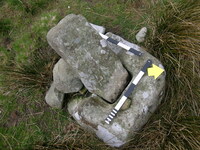
The cross shaft is leaning towards the south west, partly within the socket base. Two possible cups can be seen on the north face: the central cup has a 0.07 m diameter, is 0.01 m deep and very eroded; the top cup has a 0.04 m diameter, is 0.01 m deep and…
The cross shaft is leaning towards the south west, partly within the socket base. Two possible cups can be seen on the north face: the central cup has a 0.07 m diameter, is 0.01 m deep and very eroded; the top cup has a 0.04 m diameter, is 0.01 m deep and…
The cross shaft is leaning towards the south west, partly within the socket base. Two possible cups can be seen on the north face: the central cup has a 0.07 m diameter, is 0.01 m deep and very eroded; the top cup has a 0.04 m diameter, is 0.01 m deep and…
Rounded, large boulder standing 0.35 metres high with flat top surface. Standing on a small ridge south of boggy ground, but essentially in valley bottom with higher ground all around, except east. It has a single cup-like depression, with a 0.06 m diamet…
Rounded, large boulder standing 0.35 metres high with flat top surface. Standing on a small ridge south of boggy ground, but essentially in valley bottom with higher ground all around, except east. It has a single cup-like depression, with a 0.06 m diamet…
The cross shaft is leaning towards the south west, partly within the socket base. Two possible cups can be seen on the north face: the central cup has a 0.07 m diameter, is 0.01 m deep and very eroded; the top cup has a 0.04 m diameter, is 0.01 m deep and…
The cross shaft is leaning towards the south west, partly within the socket base. Two possible cups can be seen on the north face: the central cup has a 0.07 m diameter, is 0.01 m deep and very eroded; the top cup has a 0.04 m diameter, is 0.01 m deep and…
The cross shaft is leaning towards the south west, partly within the socket base. Two possible cups can be seen on the north face: the central cup has a 0.07 m diameter, is 0.01 m deep and very eroded; the top cup has a 0.04 m diameter, is 0.01 m deep and…
The cross shaft is leaning towards the south west, partly within the socket base. Two possible cups can be seen on the north face: the central cup has a 0.07 m diameter, is 0.01 m deep and very eroded; the top cup has a 0.04 m diameter, is 0.01 m deep and…
Rounded, large boulder standing 0.35 metres high with flat top surface. Standing on a small ridge south of boggy ground, but essentially in valley bottom with higher ground all around, except east. It has a single cup-like depression, with a 0.06 m diamet…
Rounded, large boulder standing 0.35 metres high with flat top surface. Standing on a small ridge south of boggy ground, but essentially in valley bottom with higher ground all around, except east. It has a single cup-like depression, with a 0.06 m diamet…
Rounded, large boulder standing 0.35 metres high with flat top surface. Standing on a small ridge south of boggy ground, but essentially in valley bottom with higher ground all around, except east. It has a single cup-like depression, with a 0.06 m diamet…
Rounded, large boulder standing 0.35 metres high with flat top surface. Standing on a small ridge south of boggy ground, but essentially in valley bottom with higher ground all around, except east. It has a single cup-like depression, with a 0.06 m diamet…
The cross shaft is leaning towards the south west, partly within the socket base. Two possible cups can be seen on the north face: the central cup has a 0.07 m diameter, is 0.01 m deep and very eroded; the top cup has a 0.04 m diameter, is 0.01 m deep and…
The cross shaft is leaning towards the south west, partly within the socket base. Two possible cups can be seen on the north face: the central cup has a 0.07 m diameter, is 0.01 m deep and very eroded; the top cup has a 0.04 m diameter, is 0.01 m deep and…
The cross shaft is leaning towards the south west, partly within the socket base. Two possible cups can be seen on the north face: the central cup has a 0.07 m diameter, is 0.01 m deep and very eroded; the top cup has a 0.04 m diameter, is 0.01 m deep and…
The cross shaft is leaning towards the south west, partly within the socket base. Two possible cups can be seen on the north face: the central cup has a 0.07 m diameter, is 0.01 m deep and very eroded; the top cup has a 0.04 m diameter, is 0.01 m deep and…
The cross shaft is leaning towards the south west, partly within the socket base. Two possible cups can be seen on the north face: the central cup has a 0.07 m diameter, is 0.01 m deep and very eroded; the top cup has a 0.04 m diameter, is 0.01 m deep and…
The cross shaft is leaning towards the south west, partly within the socket base. Two possible cups can be seen on the north face: the central cup has a 0.07 m diameter, is 0.01 m deep and very eroded; the top cup has a 0.04 m diameter, is 0.01 m deep and…
The cross shaft is leaning towards the south west, partly within the socket base. Two possible cups can be seen on the north face: the central cup has a 0.07 m diameter, is 0.01 m deep and very eroded; the top cup has a 0.04 m diameter, is 0.01 m deep and…