
23
tulokset sisällä
Henkilö
 Demian Maia
Demian Maia
Brazilian mixed martial artist

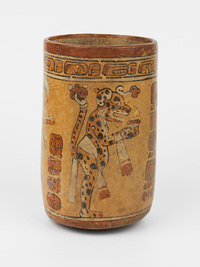
Maya ceramics evolved over time thanks to specialisation of the work, which concluded with the emergence of ceramists linked to the court and the elite. In the late Classic Period (AD 600-900), a diversification of decorative styles can be found, with nar…
Maya ceramics evolved over time thanks to specialisation of the work, which concluded with the emergence of ceramists linked to the court and the elite. In the late Classic Period (AD 600-900), a diversification of decorative styles can be found, with nar…
These conceptual and minimalist camahuil figurines are anthropomorphic statuettes in the shape of a wedge or an axe. The figures' traits were highlighted with simple geometric line incisions. Archaeologically, they are associated with burials and offe…
Material/Tècnica: jadeïta
Material/Tècnica: ceràmica
One of the great cemeteries of the Maya era is located on Jaina Island, with 20,000 tombs dating from AD 500 to 1000. Numerous terracotta figurines deposited as mortuary offerings have been found in them. Most of them were modelled and decorated with inci…
Maya ceramics evolved over time thanks to specialisation of the work, which concluded with the emergence of ceramists linked to the court and the elite. In the late Classic Period (AD 600-900), a diversification of decorative styles can be found, with nar…
Ceremonial axes were stone objects that formed part of Maya ballgame players' grave goods, though they also can be found in other regions. They seem to originate from the coast of the Gulf of Mexico. While some authors have suggested that they were us…
Història de l'objecte: Acquired during the Ethnological Museum's expedition to Central America, performed between September and October, 1965, and led by August Panyella Gómez, director, and Eudald Serra i Güell, anthropologist
Material/Tècnica: jadeïta
Material/Tècnica: jadeïta
One of the great cemeteries of the Maya era is located on Jaina Island, with 20,000 tombs dating from AD 500 to 1000. Numerous terracotta figurines deposited as mortuary offerings have been found in them. Most of them were modelled and decorated with inci…
Maya ceramics evolved over time thanks to specialisation of the work, which concluded with the emergence of ceramists linked to the court and the elite. In the late Classic Period (AD 600-900), a diversification of decorative styles can be found, with nar…
The material and artistic manifestation of Mayan culture commonly reflect the social structure of this people. Observing the ceramic figures, for example, we see how the way of dressing of the Mayas varied according to the social status and gender of the …
Ceremonial axes were stone objects that formed part of Maya ballgame players' grave goods, though they also can be found in other regions. They seem to originate from the coast of the Gulf of Mexico. While some authors have suggested that they were us…
Història de l'objecte: Acquired during the Ethnological Museum's expedition to Central America, performed between September and October, 1965, and led by August Panyella Gómez, director, and Eudald Serra i Güell, anthropologist
Història de l'objecte: Acquired during the Ethnological Museum's expedition to Central America, performed between September and October, 1965, and led by August Panyella Gómez, director, and Eudald Serra i Güell, anthropologist
The Maya believed in the reincarnation of the soul after it had journeyed to the sky or to the underworld to be reborn, free from all memories, as a new person. Funerary rituals had to ensure that this journey to other areas of the cosmos had taken place …
Material/Tècnica: ceràmica / modelat, engalbat, policromat
Material/Tècnica: ceràmica
Ceremonial axes were stone objects that formed part of Maya ballgame players' grave goods, though they also can be found in other regions. They seem to originate from the coast of the Gulf of Mexico. While some authors have suggested that they were us…
Ceremonial axes were stone objects that formed part of Maya ballgame players' grave goods, though they also can be found in other regions. They seem to originate from the coast of the Gulf of Mexico. While some authors have suggested that they were us…
These conceptual and minimalist camahuil figurines are anthropomorphic statuettes in the shape of a wedge or an axe. The figures' traits were highlighted with simple geometric line incisions. Archaeologically, they are associated with burials and offe…