
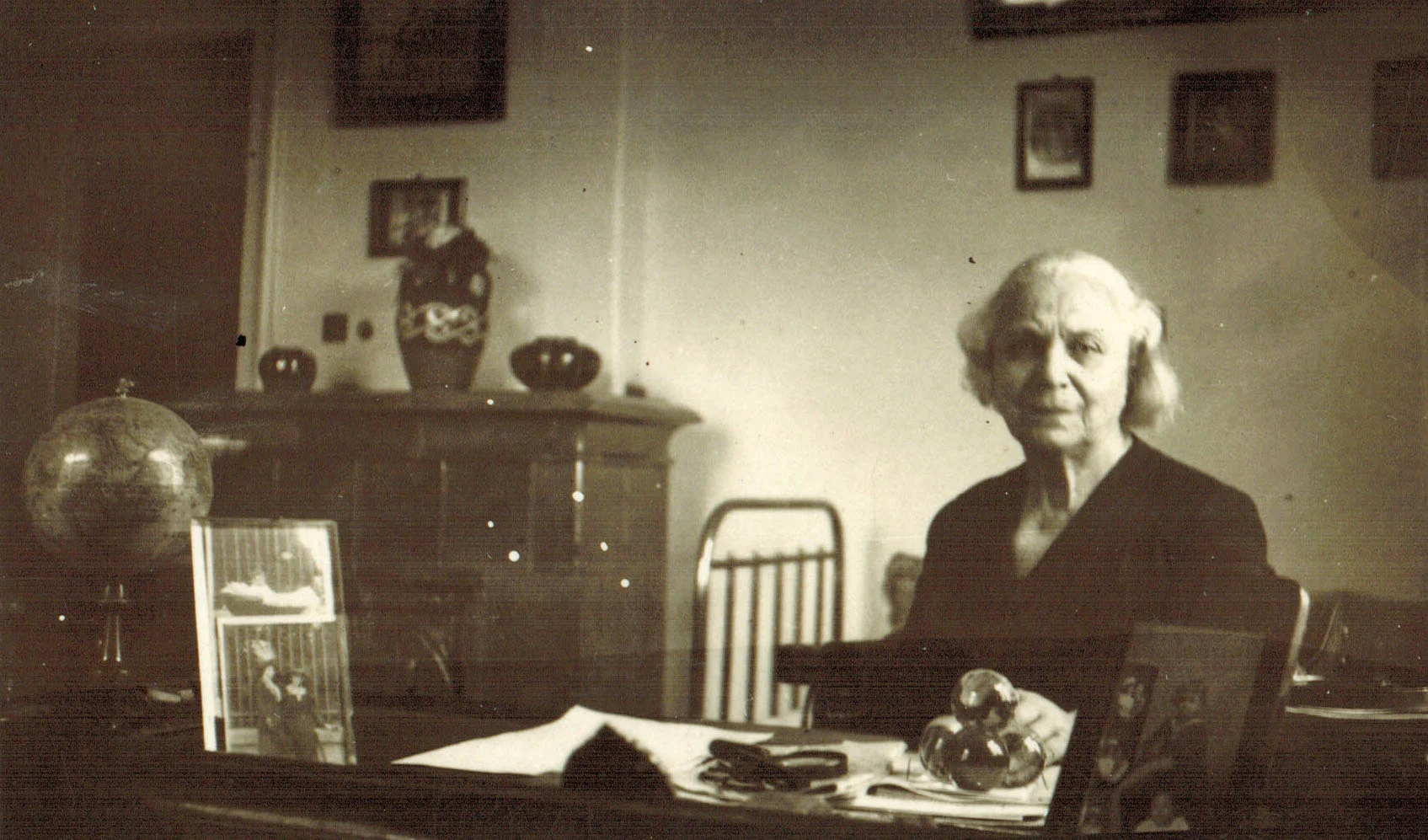
Ekaterina Karavelova is one of the most influential women in Bulgarian history from the late 19th to the mid-20th century – an example of how a woman can combine the roles of mother, wife, teacher, writer, public figure and peacemaker.
Her unyielding spirit and moral authority illuminate key moments in Bulgaria’s political and military history, revealing the enduring ideals of a woman marked by profound personal tragedies.
'Son, you are a father too – do no harm to anyone.'
These bold and motherly words were added in 1943 by the 83-year-old Ekaterina Karavelova at the end of а petition to Tsar Boris III.
The document was prepared together with Rabbi Dr. Hananel and two Jewish women who, despite the curfew forbidding them to be on the streets after dusk, were sent to Karavelova’s home by the Bulgarian Orthodox Metropolitan Stefan. He knew that Ms. Karavelova would try to help prevent the imminent deportation of 49,000 Bulgarian Jews. On one of the darkest nights in World War II Sofia, the elderly lady delivered the petition to Princess Evdokia, the sister of the Bulgarian Tsar. Ekaterina Karavelova consistently defended the rights of Bulgarian Jews, which places her among the individuals who contributed to their rescue.


Who was Ekaterina Karavelova?
Born in 1860 in the city of Ruse, Ekaterina Karavelova went to study in Moscow when she was only ten years old. There she met Petko Karavelov, the future Prime Minister of Bulgaria and brother of the writer Lyuben Karavelov.
After returning to her hometown at the age of seventeen, she organised classes for children in her family home, divided into three groups, because the local high-school building was undergoing renovation. In 1880, she married Petko Karavelov and moved with him to Sofia, and later to Plovdiv, where he briefly served as mayor.


Petko and Ekaterina Karavelov had three daughters, each marked by a tragic fate.
Radka died in 1882 at the age of only two. Lora, known as the muse of the poet Peyo Yavorov, took her own life in 1913. Viola suffered from mental health illnesses and later died after her husband, the renowned journalist Josif Herbst, disappeared during the 1925 bombing of Saint Nedelya Church. These tragedies did not break Karavelova, who remained devoted to public service until the end of her life.

Political advisor, nurse and campaigner
Ekaterina was the closest advisor to her husband, the statesman Petko Karavelov. In this way, she played an active role in laying the foundations of post-liberation Bulgaria. She earned the respect of both her compatriots and representatives of foreign embassies.
'I plead for justice, or in other words - for world peace.'
During the Serbo-Bulgarian War of 1885, while her husband was serving as Prime Minister, she earned the nickname 'the only man in Sofia'.
Her contemporaries preserved stories of how, during the Battle of Slivnitsa - the decisive engagement of the war, fought only about 30 kilometres northwest of Sofia and close enough for its artillery fire to be heard in the capital - Karavelova offered wise and decisive support to her husband and the government. In the moments of greatest panic among Sofia’s residents, she organised medical relief efforts in the city’s hospitals and personally cared for the wounded.

When the Serbian forces were defeated, Karavelova continued her work as a Samaritan nurse, tending to the severely injured. Bulgarian soldiers dictated letters to her, which she sent to their families. However, she demonstrated the same care to the wounded Serbian soldiers, who, moved to tears, dictated letters in Serbian to their loved ones. Years later, these blood-stained words would resonate in the speeches she delivered at international peace congresses.

In 1887, Petko Karavelov was arrested by his political opponents. He spent five years in the 16th century Black Mosque in Sofia, a granite architectural masterpiece, converted into a grim prison. When Karavelova, together with other wives of political prisoners, appealed to foreign ambassadors for help and spoke about the torture being inflicted, the authorities arrested her as well and even demanded the death penalty for her.

'I did what any woman in my place would do for her husband.'
Karavelova declared this before the court, and one of the summoned jurors cast a decisive vote of not guilty - following his conscience despite the threats made against him.
Educator, activist and leader
Schools in Sofia banned Karavelova from working as a teacher, and she was forced to return to Ruse, her hometown, with her daughters Viola and Lora. There she found work at the local Catholic school. Her impeccable command of foreign languages: French, German, English and Russian, together with her eloquence, had already established her as a respected publicist and translator.


Not long after, the regime changed and Ekaterina returned to Sofia with her daughters and continued her public work actively, even after the death of Petko Karavelov in 1903. She headed the women’s society Maika (Mother) and its girls school for almost two decades. She taught women how to support themselves and, under her leadership, the society grew into an educational and cultural centre — a true 'cradle of civic education'.

Ekaterina Karavelova was the founder of the Bulgarian Women’s Union and chairwoman of the Bulgarian section of the Women’s International League for Peace and Freedom. She participated in numerous international conferences, where she consistently advocated for peace and human rights.
Ekaterina Karavelova's legacy
'Man is on this earth to live and create good, not to kill and destroy.'
In 1938, on the occasion of the 50th anniversary of her public activities, prayers for her health were read in all churches of the Kingdom of Bulgaria, and church bells rang in her honour.
Ekaterina Karavelova died in 1947 and was buried with state honours next to her husband’s grave in the courtyard of the Church of Saint Sedmochislenitsi (formerly the Black Mosque). At Petko Karavelov’s suggestion, the dark detention facility where he had once been imprisoned was transformed into an Orthodox church with impressive architecture.

Through her life and work, Ekaterina Karavelova leaves a legacy of striving for universal human ideals – peace, equality, and compassion. She reminds us that the voice of women echoes the voice of all humanity.
Este artículo ha sido posible gracias al programa de subvención editorial de Europeana, que financia la creación de artículos que pongan de relieve a comunidades, voces y experiencias infrarrepresentadas. Descubre más sobre el programa de subvención editorial y cómo solicitarlo.
NB: The copyright on images 1, 8 and 9 belongs to: House Museum "Petko and Pencho Slaveykovi" at the National Literary Museum.