
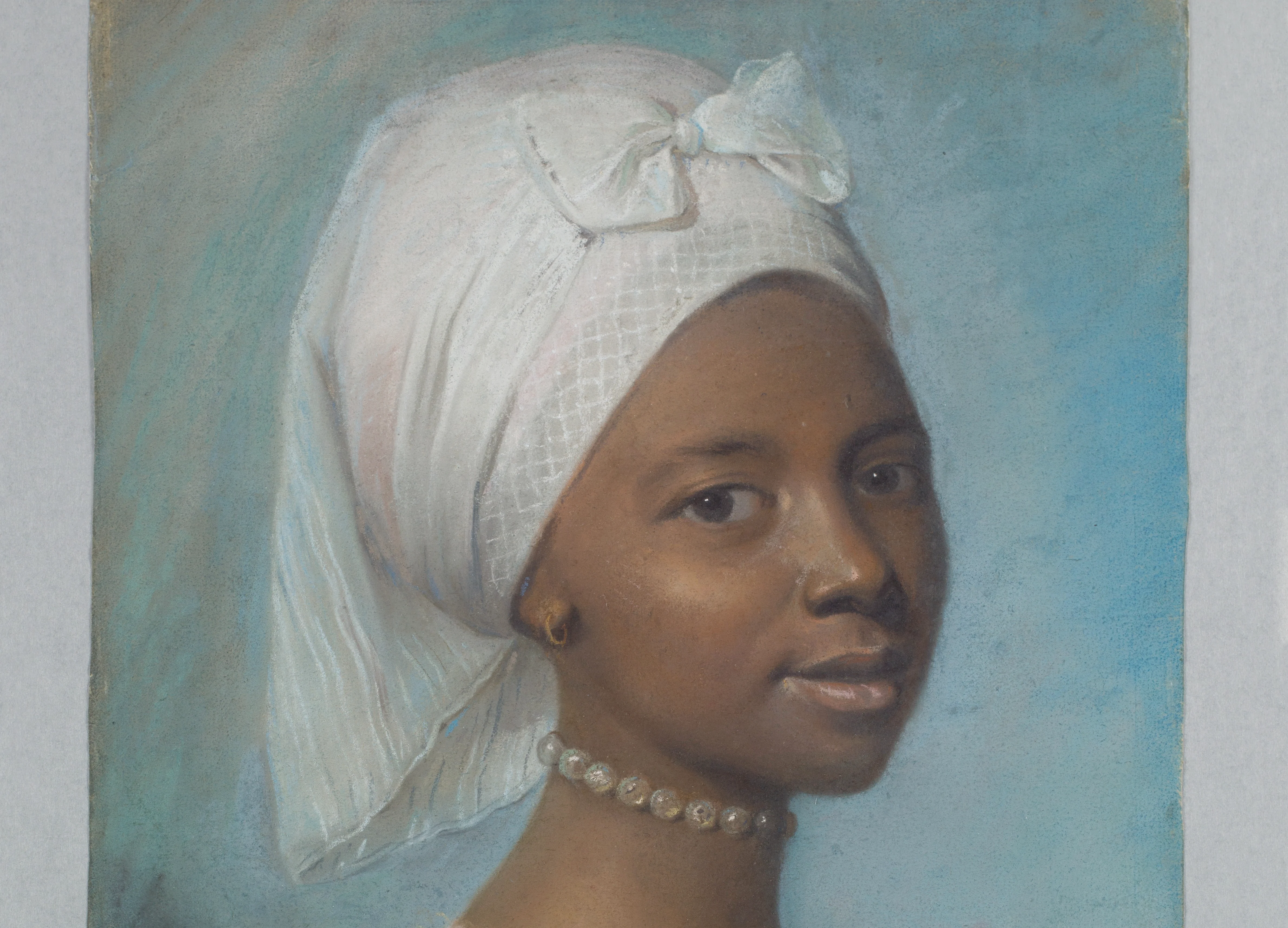
Pauline, also known as Pauline Villeneuve, was an 18th century Guadaloupian woman whose successful fight to free herself from enslavement in Nantes raised legal arguments about the situation of enslaved people in the Kingdoms of France.
Who was Pauline Villeneuve?

Pauline was born into enslavement in Guadeloupe in 1697. In January 1714, her enslaver, Madame Villeneuve, sent her to a benedictine convent - Notre-Dame of Calvary, in Nantes. Although it was not unusual to send an enslaved person to mainland France in this way, it was uncommon at that time to entrust them to a religious institution, as most remained in the domestic service of their enslavers.
How did Pauline liberate herself from enslavement?
In 1715, when Mme Villeneuve wanted to take Pauline back, the young woman refused, wishing to remain at the convent where she had found her vocation. Although, in theory, her status as an enslaved person prevented her from deciding her own fate, she received the support of her congregation: in the convent's records, the document recording Pauline's admission to the novitiate on 26 January 1715 makes no mention of her status as a slave, and Mme Villeneuve is referred to as ‘family’ rather than owner.

Determined to recover what she considered her property, Mme Villeneuve attempted to assert her rights over Pauline before the court in Nantes, based on the Code Noir, which governed relations between free and enslaved people in the French colonies. However, she was unsuccessful, and Pauline took her vows on 7 July 1716, under the religious name of Sister Pauline Rose de Sainte Thérèse.
How did Pauline’s actions affect France?
The young woman's legal victory highlights the legal imbroglio that arose in the 18th century with the presence of people with slave status in the Kingdom of France.
Her situation violated the long-standing principle of ‘sol libre’, which states that no-one is a slave in France and any enslaved person setting foot on metropolitan French soil automatically becomes free. This principle stems from the Edict of 3 July 1315, when Louis X the Quarrelsome abolished serfdom on royal territory. When the Code Noir was adopted by Louis XIV in 1685 to regulate the practice of enslavement in the French colonies, it did not apply in metropolitan France, contrary to the wishes of the colonists, who demanded that the principle of ‘sol libre’ should not apply to their enslaved people when they were in metropolitan France. In 1704, Intendant Michel Bégon requested that enslaved people be treated equally on both sides of the Atlantic.

In 1716, Gérard Mellier, sub-delegate of the Intendant of Brittany and future mayor of Nantes, was alarmed by the consequences of the ruling in favour of Pauline and argued in a memorandum for the extension of the Code Noir to metropolitan France. His demands were partially met on 25 October 1716, with a royal edict authorising the arrival of enslaved people in metropolitan France, provided that their enslavers obtained permission from the Governors-General and that their stay was limited to a maximum of three years. The wording of the text was a clear violation of the principle of sol libre:
‘Negro slaves, of either sex, who are brought to France by their masters, or who are sent there by them, shall not be entitled to claim their freedom on the pretext of their arrival in the Kingdom, and shall be required to return to our Colonies when their Masters deem it appropriate.’
For this reason, the edict was rejected by the Parliament of Paris, which refused to ratify the application of enslavement on French soil, but it was accepted by those of Brittany and Aquitaine, where colonial interests were significant.
What was Pauline’s legacy?

Pauline remained in her congregation in Nantes for more than 50 years. She died on 3 November 1765 at the age of 69, after spending her life in prayer, study and manual labour. She had acquired the status of ‘Venerable Mother’, a sign that her origins had not prevented her from progressing in the hierarchy of her order.
A quarter of a century after the death of the woman whose victorious struggle had prompted the royal edict of 1716, the principle of sol libre was restored by the French Revolution in 1791, before being suspended again by Napoleon in 1802, then reaffirmed by Louis-Philippe I in 1836, and finally extended to all French colonies in 1848 when enslavement was definitively abolished by the Second Republic.
Pauline's story was rediscovered in 2021 through a major exhibition ‘L'abîme’ (The Abyss) on Nante’s participation in the slave trade. The exhibition took place at the Château des Ducs de Bretagne museum. A book by the museum’s scientific director, Krystel Gualdé, is dedicated to her: 1716 Pauline, a slave at the convent.
Thank you to Fondation pour la Mémoire de L’esclavage (FME) for sharing this story with Europeana.